
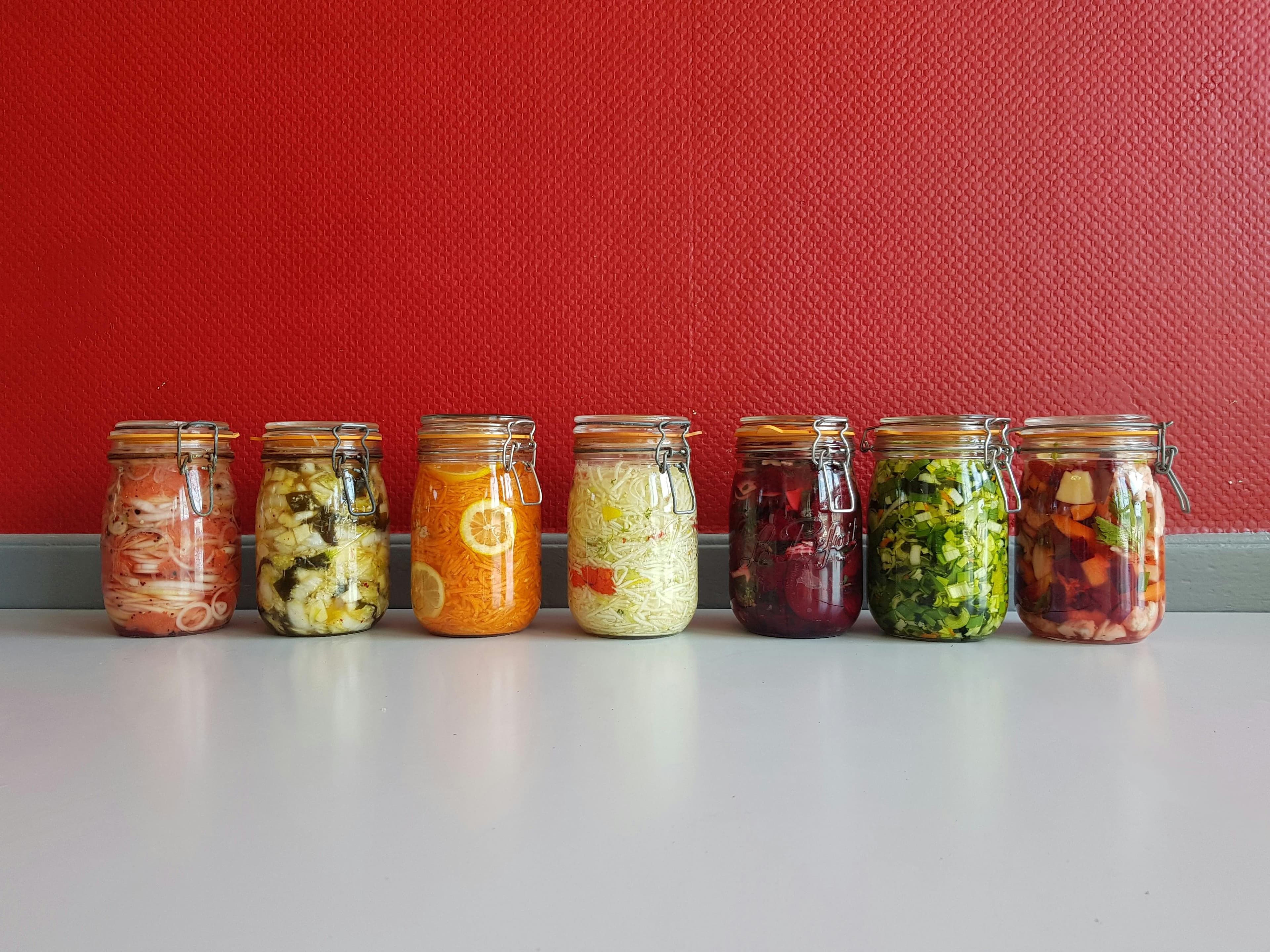
Fermented Foods + Fiber: The Ultimate 2026 Gut Combo
Fermented foods have been having a moment for years. So has dietary fiber. But in 2026, the conversation has shifted from "eat more of each" to something more precise: pair them together, strategically, and your gut microbiome gets something neither can deliver alone.
At Expo West this year, nearly every gut health brand was combining fermented ingredients with fiber-rich whole foods. Innova Market Insights named "microbiome-supportive combinations" one of the top ten food trends of 2026. The science behind it is compelling — and the practical application is simpler than you'd think.
The core idea: fiber feeds your gut bacteria (prebiotic), fermented foods deliver live bacteria (probiotic), and together they produce postbiotics — the compounds that do the actual work of supporting gut health, immunity, and even mood.
Why the Combination Works Better Than Either Alone
To understand the synergy, it helps to know what each one does independently.
Fiber acts as a prebiotic — it's food for your gut bacteria. Without sufficient fiber, beneficial bacteria like Bifidobacterium and Lactobacillus can't thrive. They starve, and less helpful strains fill the gap.
Fermented foods — kefir, yogurt, kimchi, sauerkraut, kombucha, miso — deliver live microorganisms (probiotics) that can temporarily colonise your gut and shift the bacterial balance in a positive direction.
The problem: probiotics alone don't last long without the right fuel. Most probiotic strains survive in the gut for days to weeks, not permanently. What determines whether they thrive or fade is whether there's enough fiber to sustain them.
The postbiotic payoff
When probiotic bacteria ferment dietary fiber, they produce postbiotics — metabolites including short-chain fatty acids (SCFAs) like butyrate, acetate, and propionate. These compounds:
- Reinforce the gut lining, reducing intestinal permeability
- Regulate immune responses throughout the body
- Communicate with the brain via the gut-brain axis, influencing mood and cognition
- Help control blood sugar and appetite signalling
The more fiber available, the more postbiotics are produced. The fermented foods provide the bacteria. The fiber provides the substrate. Together, they're far more productive than either alone.
The Best Fermented Food and Fiber Pairings in 2026
Not all combinations are equal. These pairings work particularly well because the fiber sources are prebiotic-rich and the fermented foods contain well-studied probiotic strains.
Kefir + Oats
The classic pairing. Kefir is one of the most diverse probiotic foods available — a good-quality kefir contains 10–15 bacterial strains, far more than most yogurts. Oats contain beta-glucan, a soluble fiber that Lactobacillus and Bifidobacterium strains ferment readily.
Make overnight oats with kefir instead of milk: combine 50g rolled oats, 150ml kefir, a tablespoon of ground flaxseed, and top with berries in the morning. That's easily 6–8 plant points before 9am, and a potent prebiotic-probiotic combination.
Kimchi + Brown Rice or Barley
Kimchi provides Lactobacillus kimchii and related strains. Brown rice and barley supply resistant starch — a particularly effective prebiotic that feeds bacteria in the lower colon where fermentation is most active. The pairing is also one of the most anti-inflammatory food combinations studied in recent years, with Korean population data linking regular kimchi and grain consumption to lower inflammatory markers.
Yogurt + Banana + Flaxseed
Ripe bananas contain fructooligosaccharides (FOS), a prebiotic fiber that feeds Bifidobacterium directly. Ground flaxseed adds both soluble fiber and lignans. A yogurt bowl with banana and flaxseed is simple, quick, and covers the prebiotic-probiotic combination in under two minutes.
Miso Soup + Wakame + Tofu
Miso is fermented soybean paste — a source of Aspergillus oryzae and Lactobacillus strains, plus natural glutamates that support the gut lining. Wakame seaweed contains fucoidan, a prebiotic fiber. Add silken tofu for plant protein and you have a complete gut-supportive meal component.
Sauerkraut + Lentils
Sauerkraut is one of the most studied fermented vegetables, with Leuconostoc mesenteroides as a dominant strain. Lentils provide both soluble and insoluble fiber plus resistant starch. The combination is also one of the highest plant-point pairings you can assemble quickly — lentil soup with a serving of sauerkraut on the side counts as two plants and feeds a wide diversity of bacterial strains.
Prebiotics, Probiotics, and Postbiotics: The 2026 Framework
The language around gut health has matured significantly. In 2026, nutritionists and researchers are less focused on individual probiotic strains and more focused on the prebiotic-probiotic-postbiotic axis as a whole system.
Here's a simple framework:
- Prebiotics (the fuel): oats, leeks, garlic, onion, asparagus, banana, legumes, flaxseed, chicory root
- Probiotics (the workers): kefir, live yogurt, kimchi, sauerkraut, kombucha, miso, tempeh, natto
- Postbiotics (the output): produced when probiotics ferment prebiotics — butyrate, acetate, propionate, equol, and others
The goal is to ensure you have enough of both prebiotics and probiotics in your diet so that postbiotic production is consistent. One or two servings of fermented food per day alongside 25–30g of fiber from diverse plant sources is a well-supported target.
How to Log the Combo in NutriBloom
NutriBloom tracks both fiber intake and plant diversity — which makes it particularly useful for building fermented-fiber combinations into your daily habits.
When you log a meal like kefir overnight oats, NutriBloom counts the oats, flaxseed, and berries toward your plant diversity score, and the beta-glucan and flaxseed fiber toward your daily fiber target. The fermented foods serve as a reminder that fiber isn't just about quantity — it's about what the fiber is feeding.
A practical approach: aim to include at least one fermented food in the same meal or snack as a high-fiber prebiotic food. NutriBloom's meal log makes it easy to spot days when you've had fiber without fermentation or vice versa.
If you're working toward the 30-plant-per-week goal, the 30 plants challenge guide has a full breakdown of how to build plant diversity without triggering the bloating that often comes with rapid fiber increases — relevant here because adding fermented foods while rapidly increasing fiber can amplify digestive symptoms in the short term.
Getting Started Without Overwhelm
You don't need to overhaul your diet. Start with one pairing per day:
- Morning — swap regular milk in porridge for kefir, or add live yogurt to your smoothie
- Lunch — add a tablespoon of kimchi or sauerkraut to any grain-based meal
- Dinner — use miso paste as a base for dressings, marinades, or soups instead of stock
Within a few weeks, these become automatic. Your gut bacteria diversify, your postbiotic production increases, and the compounding effect of consistent prebiotic-probiotic pairing starts to show up in how you feel — digestion, energy, and often sleep.
The fermented foods and fiber combination isn't a trend that will fade. It's a reflection of where gut health science has been pointing for a decade: diversity and synergy matter more than any single superfood or supplement.