
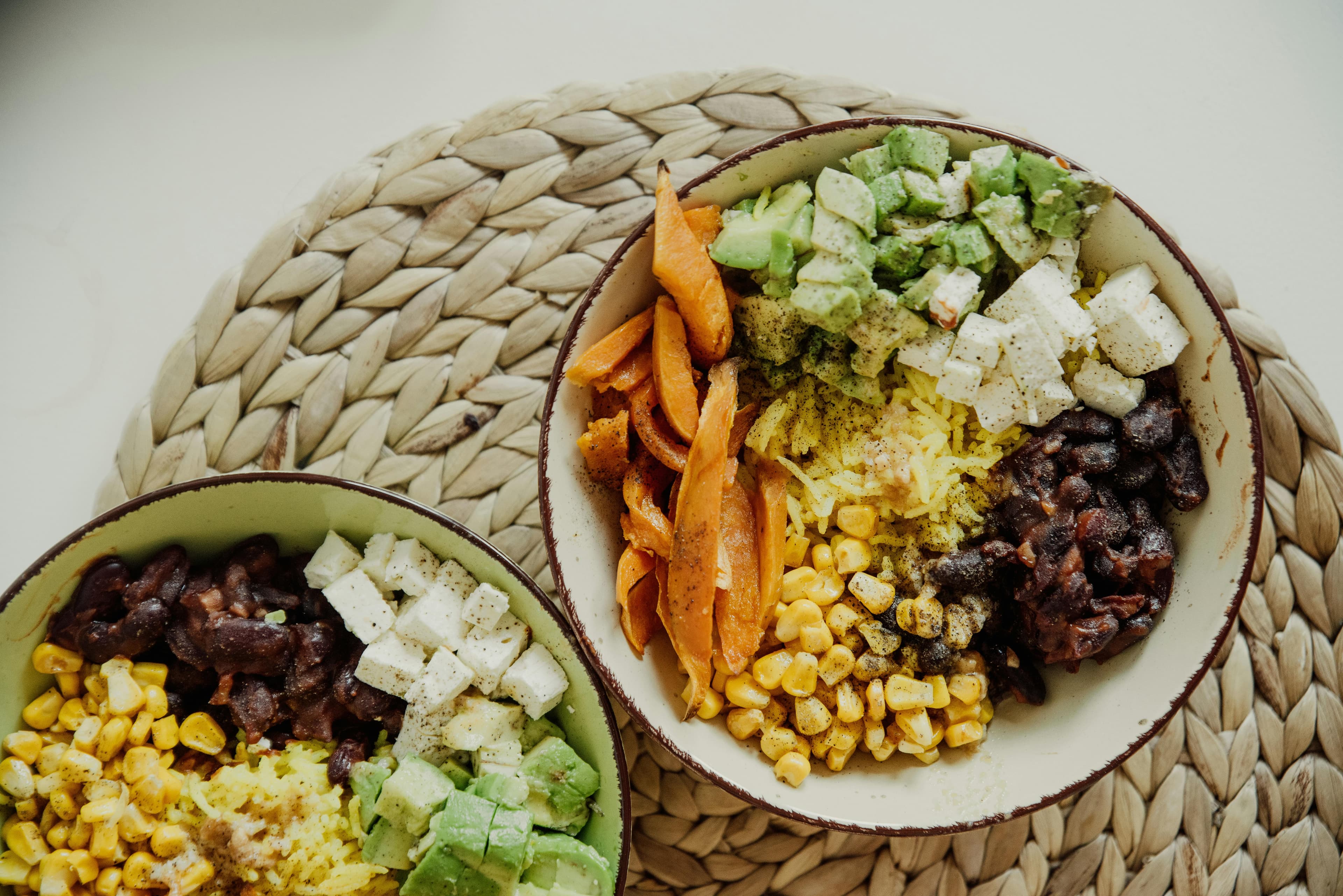
For years, fiber advice came down to one number: 30 grams a day. Hit the target, done. But in 2026, nutritional science has quietly shifted the goalposts — and the new consensus is more nuanced, more interesting, and more actionable.
Fiber diversity beats fiber quantity. Getting 30g from two sources is meaningfully less valuable than getting 20g from ten.
Here's why — and what to do about it.
The Problem With Thinking in Grams
The 25–38g daily recommendation was built on population-level data linking total fiber intake to outcomes like reduced colorectal cancer risk, better glycemic control, and lower cardiovascular disease rates. It's a useful proxy. But it's an oversimplification.
Your gut microbiome isn't one thing — it's an ecosystem of 100 trillion microorganisms comprising over 1,000 species. Each species is specialized. Bifidobacterium preferentially ferments inulin and fructooligosaccharides (FOS). Roseburia and Faecalibacterium prausnitzii thrive on pectin and resistant starch. Akkermansia muciniphila responds strongly to arabinoxylan found in whole grains.
Eating 30g of fiber from a single source — say, a daily psyllium supplement — feeds a narrow slice of those species. The rest go underfed. Diversity collapses. And a less diverse microbiome is consistently linked to inflammatory disease, metabolic dysfunction, and poor mental health outcomes.
The landmark data: The American Gut Project — the world's largest citizen science microbiome study — found that people who ate 30 or more different plant foods per week had measurably more diverse microbiomes than those who ate 10 or fewer. The number of plants mattered more than total fiber grams.
Short-Chain Fatty Acids: Why Diversity Drives Better Outcomes
To understand why diversity matters, you need to understand short-chain fatty acids (SCFAs).
When gut bacteria ferment fiber, they produce SCFAs — primarily butyrate, acetate, and propionate. These molecules are central to almost everything we associate with "good gut health":
- Butyrate is the primary fuel source for colonocytes (the cells lining your gut wall). It maintains the gut barrier, preventing the "leaky gut" that allows inflammatory molecules into the bloodstream. It also has direct anti-inflammatory and anti-cancer properties in the colon.
- Acetate circulates systemically, influencing cholesterol metabolism and appetite regulation via the brain.
- Propionate is converted in the liver, where it helps regulate gluconeogenesis and cholesterol synthesis.
Crucially, different fiber types stimulate the production of different SCFAs in different ratios. Inulin and FOS strongly drive butyrate via Bifidobacterium cross-feeding. Pectin preferentially increases acetate. Resistant starch boosts all three but particularly propionate.
Eating only one type of fiber means producing a lopsided SCFA profile. Eating a diverse range means your gut produces the full spectrum — and your whole body benefits.
The 2026 Shift: From Grams to Variety
The Innova Market Insights 2025/2026 trend report and the Food Institute's fiber analysis both highlight the same consumer and scientific shift: fiber variety is the emerging metric that health-conscious consumers and researchers are tracking.
This shows up in product development (symbiotic supplements pairing multiple prebiotic types), clinical research (dietary diversity indexes now used alongside total fiber in trials), and consumer behavior (the explosion of "30 plant challenge" content tracking unique sources, not grams).
What's changed scientifically:
- 2024 Cell Host & Microbe: Dietary fiber diversity — measured by the number of structurally distinct fiber types consumed — predicted microbiome resilience better than total fiber intake alone.
- 2025 Nature Metabolism: Participants with high fiber diversity showed faster microbiome recovery after antibiotic treatment compared to high-quantity, low-diversity fiber consumers.
- 2026 Gut Journal meta-analysis: Fiber source diversity, not total grams, was the strongest dietary predictor of Faecalibacterium prausnitzii abundance — the species most consistently depleted in IBD, IBS, and metabolic disease patients.
The Six Structural Types of Dietary Fiber
Understanding fiber diversity starts with knowing that "fiber" isn't one molecule — it's a category of indigestible plant carbohydrates with wildly different structures, fermentation profiles, and microbial effects.
1. Inulin and Fructooligosaccharides (FOS)
Found in: Chicory root, Jerusalem artichokes, garlic, onions, leeks, bananas Feeds: Bifidobacterium, Lactobacillus Primary SCFA: Butyrate (via cross-feeding)
Inulin is the most studied prebiotic. Even 5–8g/day meaningfully shifts microbiome composition toward Bifidobacterium dominance. Jerusalem artichokes provide ~16g inulin per 100g — making them one of the most potent prebiotic foods available.
2. Pectin
Found in: Apples (especially the skin), citrus fruits, carrots, beets, berries Feeds: Bacteroides, Prevotella Primary SCFA: Acetate, propionate
Pectin is a gel-forming fiber that slows gastric emptying and blunts post-meal glucose spikes. It's particularly valuable for metabolic health. An apple a day — eaten with the skin — provides 1.5–2g of pectin.
3. Beta-Glucan
Found in: Oats, barley, some mushrooms (particularly reishi and shiitake) Feeds: Bacteroides, Bifidobacterium Primary SCFA: Butyrate, propionate
Beta-glucan has the strongest evidence base of any soluble fiber for LDL cholesterol reduction (FDA-approved health claim at 3g/day). Oats provide ~3–4g beta-glucan per 100g dry weight.
4. Resistant Starch
Found in: Cooked and cooled potatoes/rice, green bananas, legumes, high-amylose corn Feeds: Ruminococcus, Roseburia, Faecalibacterium prausnitzii Primary SCFA: Butyrate, propionate
Resistant starch is unique: cooking and then cooling starchy foods (like potato salad or leftover rice) increases resistant starch content by 50–100%. It's also the primary substrate for the most beneficial butyrate-producing species.
5. Arabinoxylan
Found in: Whole wheat, rye, barley bran, psyllium husk Feeds: Bifidobacterium, Bacteroides Primary SCFA: All three, with high butyrate via cross-feeding
Arabinoxylan is abundant in whole grain cereals. It's one of the key reasons whole grains (not just fiber-supplemented refined grains) show superior microbiome effects in trials — the arabinoxylan structure is distinct from other fiber types and feeds different organisms.
6. Cellulose and Lignin
Found in: Vegetables, seeds, nuts, fruit skins, whole grains Feeds: Various — less fermented, more mechanical Primary effect: Bulking, transit time regulation, bile acid binding
Cellulose and lignin are largely insoluble and pass through mostly unfermented — but they still serve critical functions: accelerating gut transit, diluting carcinogens, and binding bile acids (reducing cholesterol recirculation). They're also the structural fiber that makes plant cell walls rigid, so eating whole vegetables rather than juiced or heavily processed forms preserves this fraction.
What a High-Diversity Fiber Day Looks Like
You don't need a spreadsheet. The practical heuristic: eat at least one representative from each structural type every day, and rotate your sources within each type across the week.
Breakfast: Oats with banana slices and flaxseeds (Beta-glucan + FOS/resistant starch + lignan)
Lunch: Lentil soup with a side of whole rye bread (Resistant starch + arabinoxylan + pectin from any vegetable garnish)
Snack: Apple (with skin) and a small handful of almonds (Pectin + cellulose + lignin)
Dinner: Roasted vegetables (including onion, garlic, carrot) over cooled quinoa (Inulin/FOS + pectin + arabinoxylan + resistant starch)
That's roughly 25–28g of fiber across six distinct structural types, feeding at least a dozen different bacterial species. Compare that to 30g of psyllium alone.
NutriBloom tracks not just your fiber grams, but your plant diversity score — the number of unique plant sources you've eaten this week. Research suggests 30+ plants per week is the threshold where microbiome diversity noticeably improves. Join the waitlist to track yours →
The Rotation Principle
Even within fiber types, variation matters. Eating the same five vegetables every week exposes your microbiome to the same fiber structures, polyphenols, and phytonutrients repeatedly. The microbiome adapts and optimizes for those specific substrates — at the cost of maintaining the species that ferment different fibers.
The rotation principle: cycle your fiber sources on a weekly basis, not just day to day.
Week 1 legume rotation: Lentils Monday, chickpeas Wednesday, black beans Friday Week 2 legume rotation: White beans Monday, edamame Wednesday, kidney beans Friday
Same fiber category — wildly different fiber structures, polyphenol profiles, and bacterial feeding patterns.
Apply the same logic to:
- Grains: Oats → rye → barley → buckwheat → quinoa
- Fruits: Apples → pears → berries → citrus → kiwi
- Vegetables: Broccoli → fennel → artichokes → beetroot → leeks
- Seeds: Flax → chia → hemp → sunflower → pumpkin
The 30 plants challenge — eat 30 different plant foods per week — is essentially a framework for enforcing this rotation. It works not because 30 is a magic number, but because the pursuit of variety forces structural fiber diversity.
Practical: How to Count Fiber Diversity
Tracking fiber diversity manually is harder than tracking grams — there's no "fiber type" label on food packaging. But the plant count is a reliable proxy, since different plants overwhelmingly contain different fiber structures.
Simple rules for counting plants:
- Each vegetable, fruit, legume, grain, nut, seed, and herb counts separately
- Spices count (garlic, ginger, turmeric are all plants with prebiotic properties)
- Different colors of the same vegetable count (red and yellow peppers have different polyphenol profiles)
- Processed forms count less — a fruit juice counts as a fraction of the whole fruit
A realistic target: 20 different plant foods per week to start, building toward 30 over 4–6 weeks. At 20, you're already in the top quartile of most Western populations.
The Quantity Baseline Still Matters
Diversity without adequate quantity is like having many different seeds but no water. You still need a baseline of total fiber — roughly 25g for women, 35g for men — to create the volume of fermentable substrate that diverse bacteria need.
The framework is additive, not substitutive:
- Hit the quantity baseline (25–35g/day)
- Maximize structural diversity within that quantity
- Rotate sources across weeks to prevent microbiome adaptation
In practice, eating 20–30 different plant foods per week almost automatically hits both the quantity and diversity targets simultaneously.
The gut health conversation in 2026 has moved past "eat more fiber." The question now is which fibers, from which sources, in what rotation. That's a more interesting question — and one that NutriBloom was built to help you answer.
Related reading: Gut Health and Energy: How More Fiber in 2026 Can Boost Your Day · How to Do the 30 Plants Challenge Without Bloating